Written by Paul Regan, ©paulregan.studio
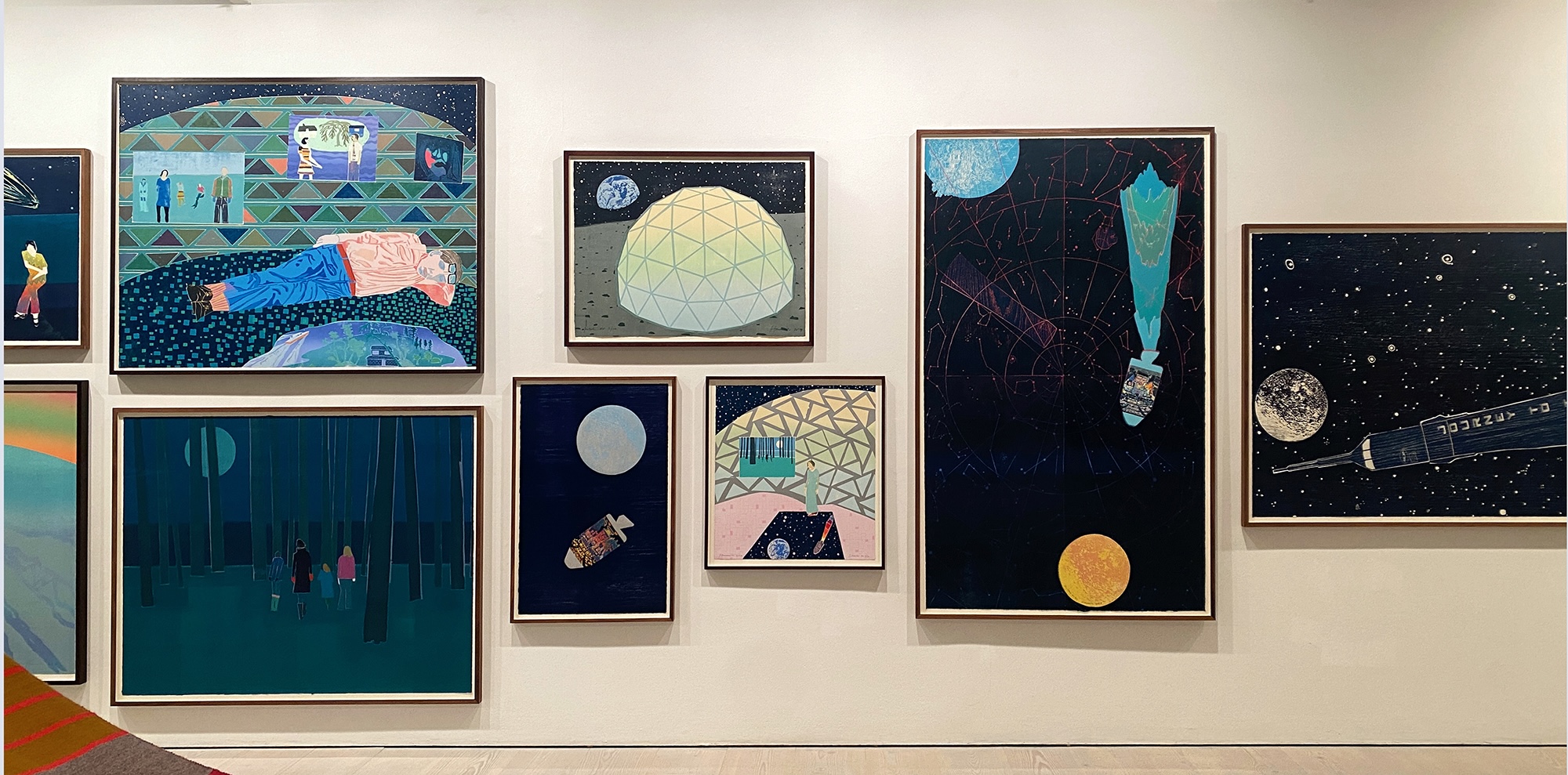
The Saatchi Gallery’s 2026 Summer Show; The Sun and The Moon: Art Inspired by the Celestial (5 June – 8 September), moved visitors through a full day across nine galleries, from dawn to the darkest hours. It explored how artists have used the sun and moon to think about themes such as mythology, spirituality, science and timekeeping.
The following sections of texts, taken from two of the rooms, give a good sense of the show’s approach:
The room titled, Sun Rising opens with a line from Romeo and Juliet — “Arise, fair sun, and kill the envious moon.” The works traced the sunrise as a marker of time and ritual, from the alignment of Stonehenge’s sarsen stones through to Impressionist and Realist painters who have used the first light to suggest peace before the day’s labour begins.
The room titled, Setting Sun turned to sunset as a symbol of transformation — the end of a cycle, a reign, or a self — touching on its role in astrology, tarot and alchemy, where the sun has stood for gold and the goal of all effort.
The following five artists were represented in the exhibition, however, the Paula Rego piece was not included:
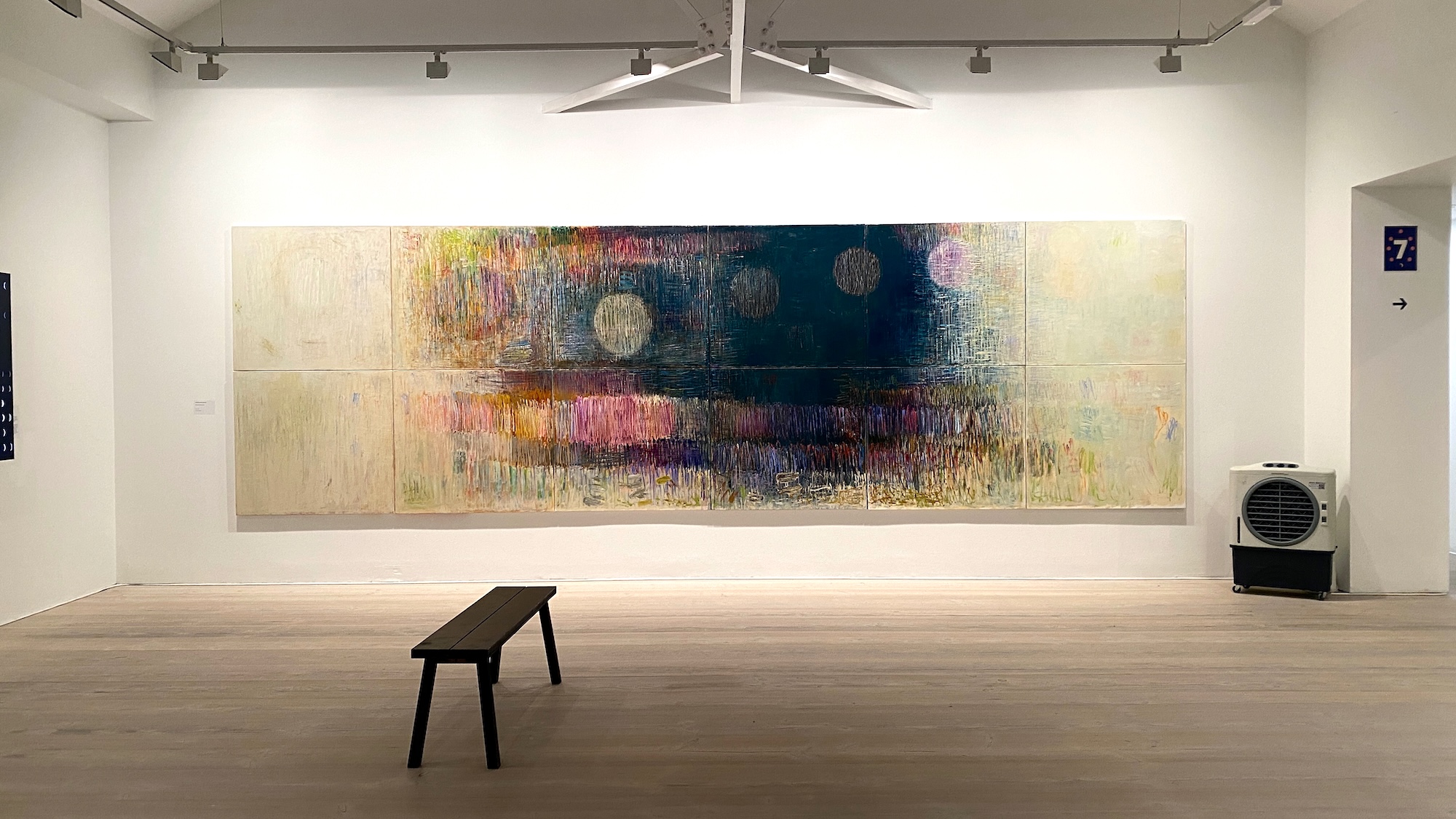
Christopher Le Brun’s Moon Rising in Daylight is a loosely, abstract painting built from Le Brun’s interest in the strange sensations time and light can produce. In this case, the odd experience of catching the moon visible in a daytime sky. There’s no literal moon to point to here; the sense of it comes through colour and atmosphere rather than depiction.
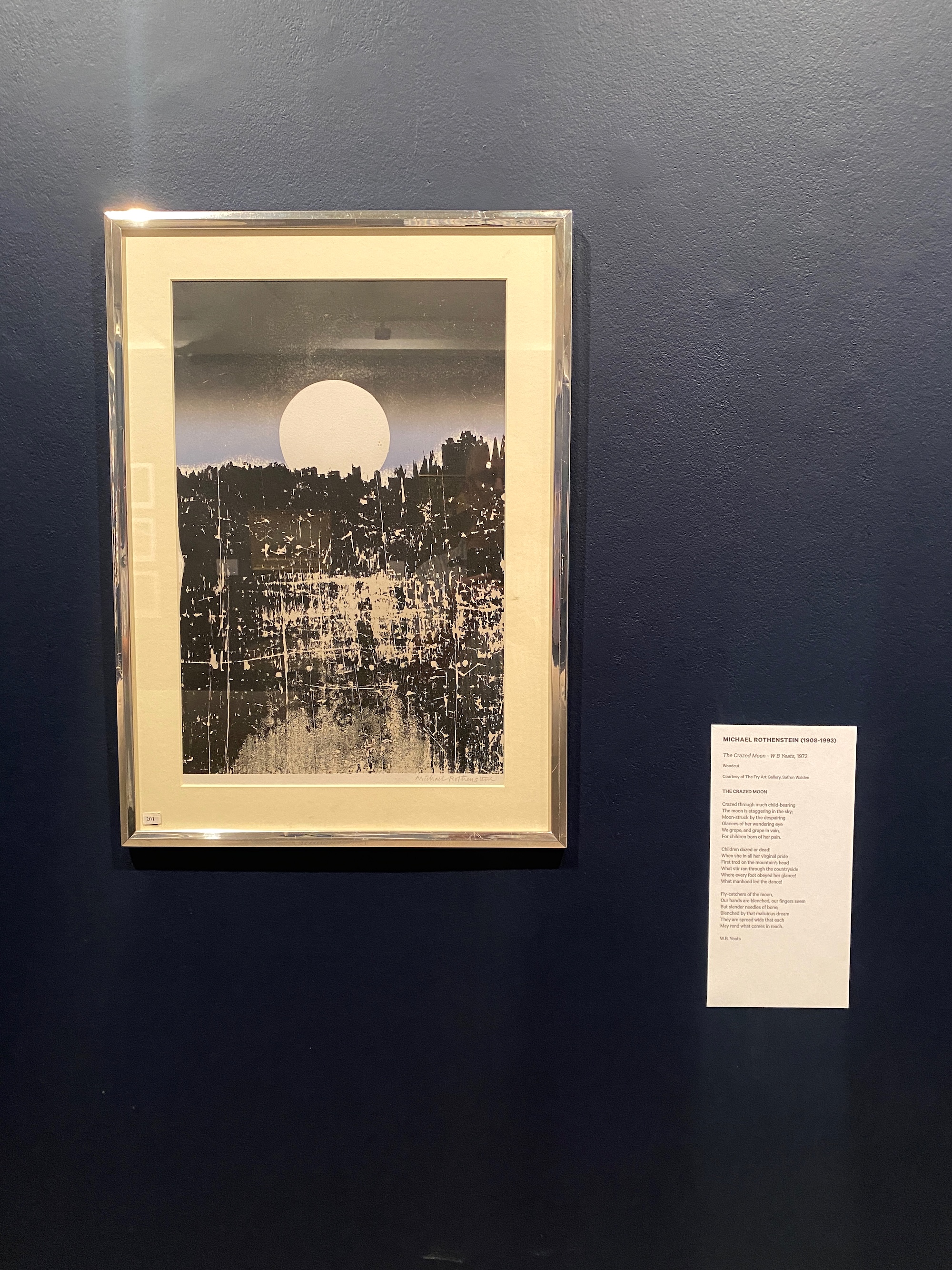
Michael Rothenstein, The Crazed Moon, 1972, is a woodcut and linocut print from his Suns and Moons portfolio. It was shown alongside the W.B. Yeats poem ‘The Crazed Moon‘. Yeats’ poem imagines the moon as unstable and staggering across the sky, worn down by its own cycles — Rothenstein’s print, textured from a piece of sea-worn marine ply, echoes that sense of a battered, restless moon rather than a calm, glowing one.
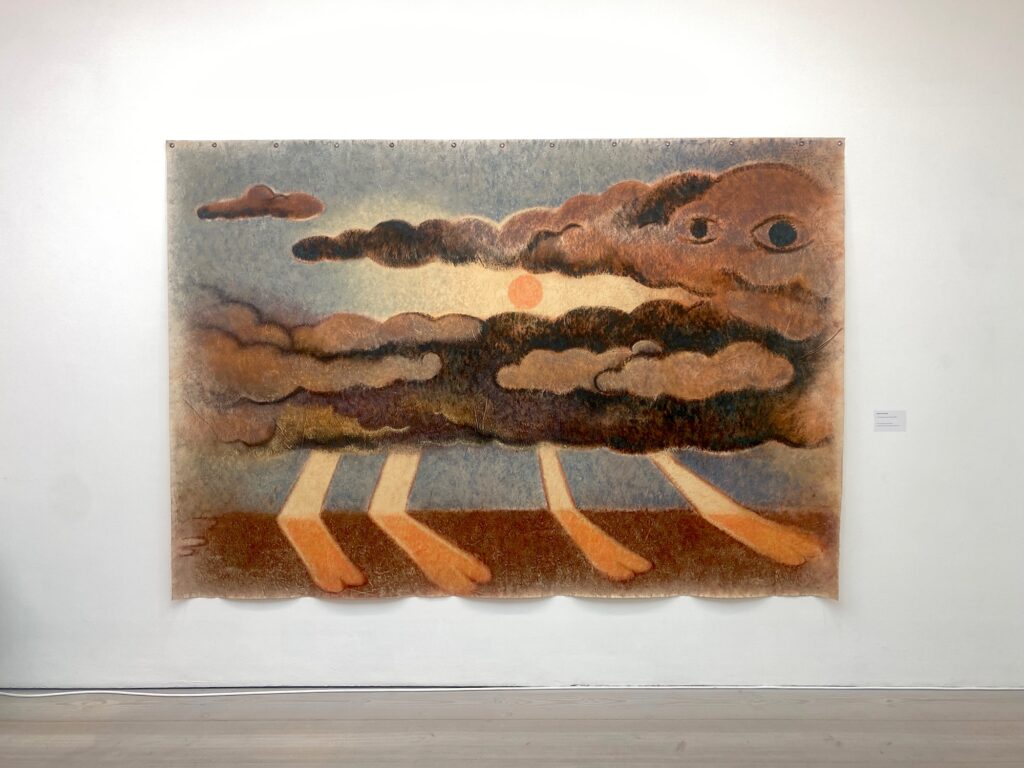
Martyn Cross’ ‘A Tomb for Immortal Ascension‘ (2022) is a large, earth-toned painting in which beams of sunlight break through a cloud with a single watching eye, striking the ground below like four hoofed legs. The sun here isn’t gentle, it’s part of Cross’s stranger, myth-like visual world, closer to an omen than a source of warmth.
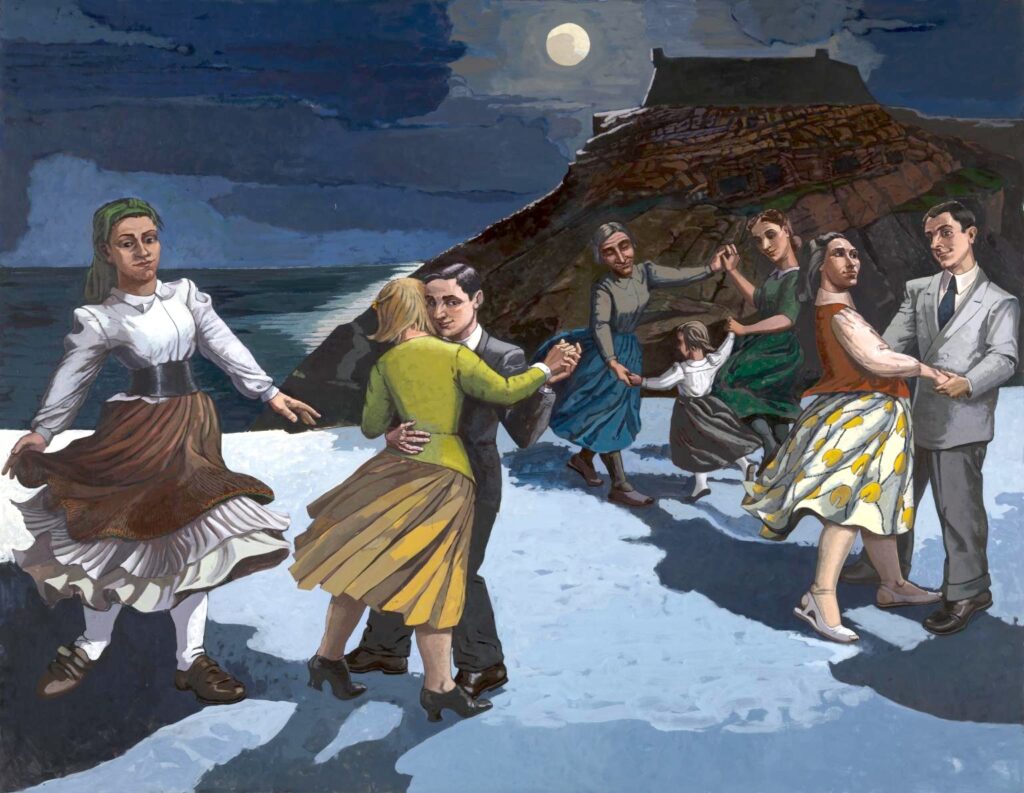
In Paula Rego’s, The Dance (1988), women dance together on a moonlit beach under a full moon. The figures represent different stages of a woman’s life. The moon doesn’t just light the scene, it presides over it, giving the gathering a ritual, almost ceremonial feel.
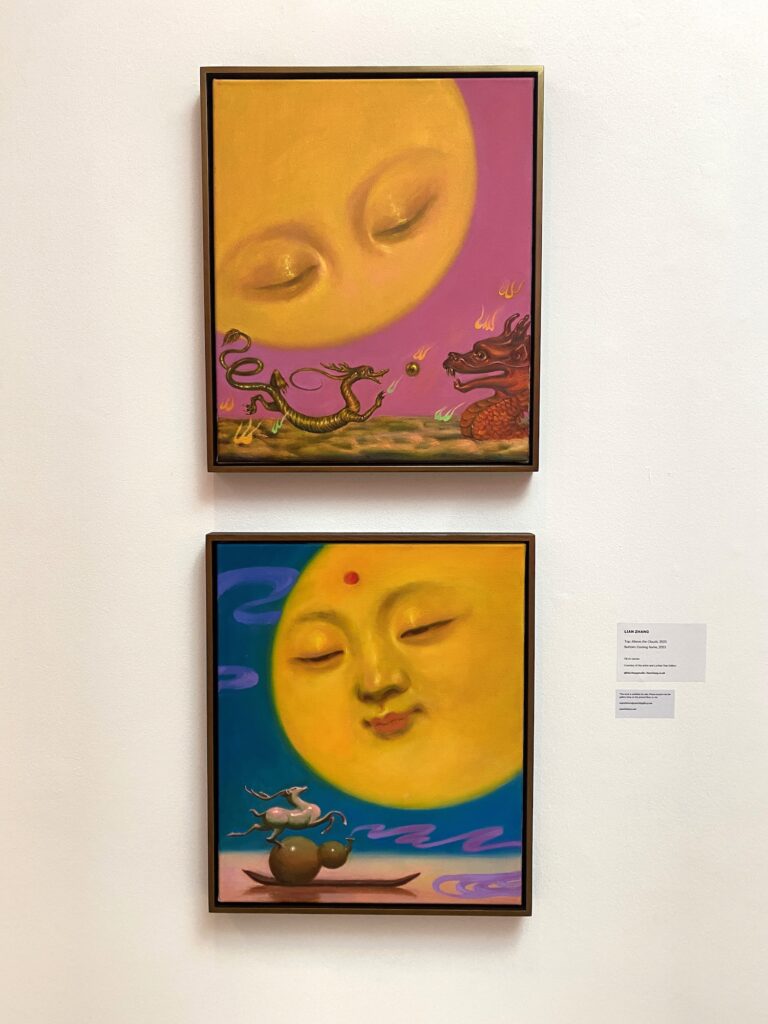
Like in her piece Coming Home (2023), Lian Zhang’s work often includes the sun and the moon in her dream-like paintings; yin and yang; partly made up, partly experienced; juxtapositions between interiors and exteriors; a Chinese artist living in London.
Suggested activity:
Students are to make an artwork in response to the images and text above. The piece can be invented or experienced, representational, abstract, or somewhere in between. The finished piece should include a sun, a moon, or both.
Students can work independently or in small groups.
- Read the texts and look at the five artworks above in advance.
- Planning: What is their concept? How will the painting be composed? How will they use colour and tone to capture the feeling in their idea? What size will the piece be?
- Make the work.