Written by Paul Regan, ©paulregan.studio
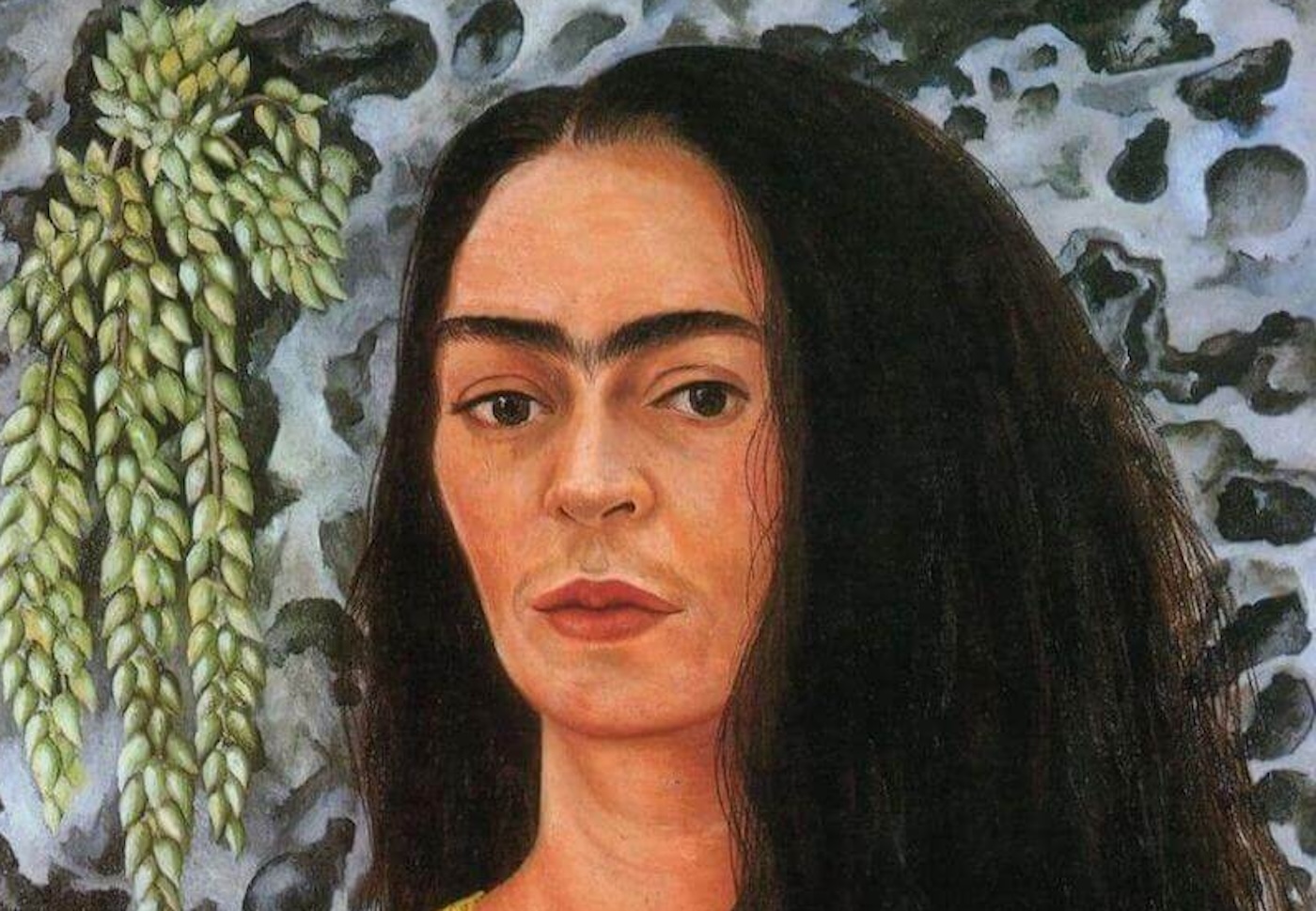
Frida Kahlo painted herself more than almost any other artist — roughly a third of her surviving work is self-portraiture. Tate Modern’s Frida: The Making of an Icon exhibition (25 June 2026 – 3 January 2027), brings together over 30 of these paintings. If you can’t get to see the exhibition, there’s plenty about the artist online. You might like to start with the Tate Modern website, whilst listening to a review of the exhibition on the BBC’s Front Row podcast, then sit down for a couple of hours to watch one of the many films that have been made about her life and work.
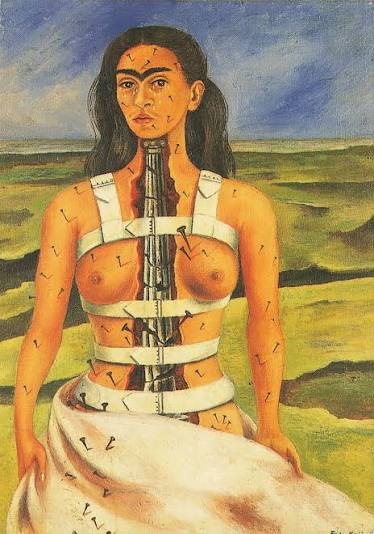
It’s widely written that, after a bus accident at eighteen left her in long-term pain, Kahlo spent much of her recovery in bed with a mirror fixed above her — painting herself was often simply what was in front of her. Her pictures are full of the objects of that experience: medical corsets, thorns and fixings to her spine.
Kahlo is often grouped with the Surrealists — André Breton called her “a self-made Surrealist” — though she always resisted the label, insisting she painted her own reality rather than dreams. She is also recognised for building a strong visual identity out of Mexican culture at a time when European style was dominating.
Lesson idea: Ask your class to bring in three objects that say something about their own life, and sketch out a self-portrait built around them.
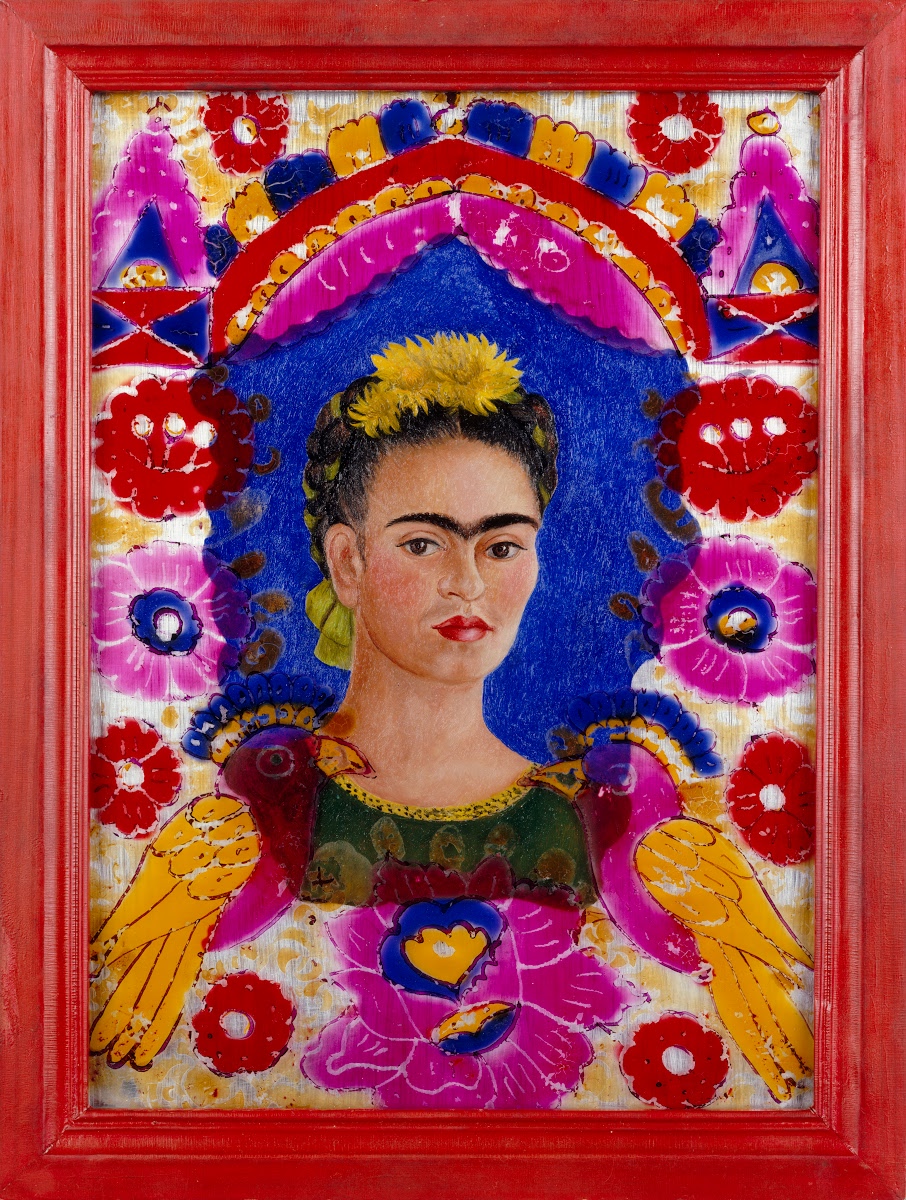
‘The Frame’
‘The Broken Column’
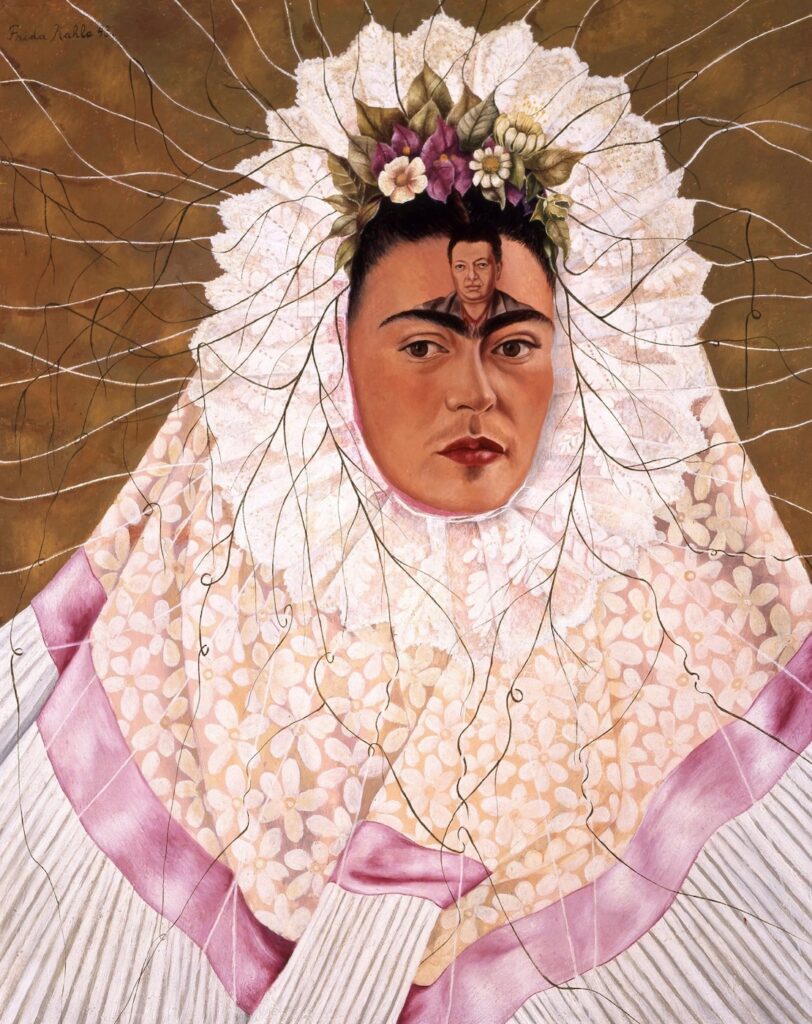
‘Self Portrait as a Tehuana’
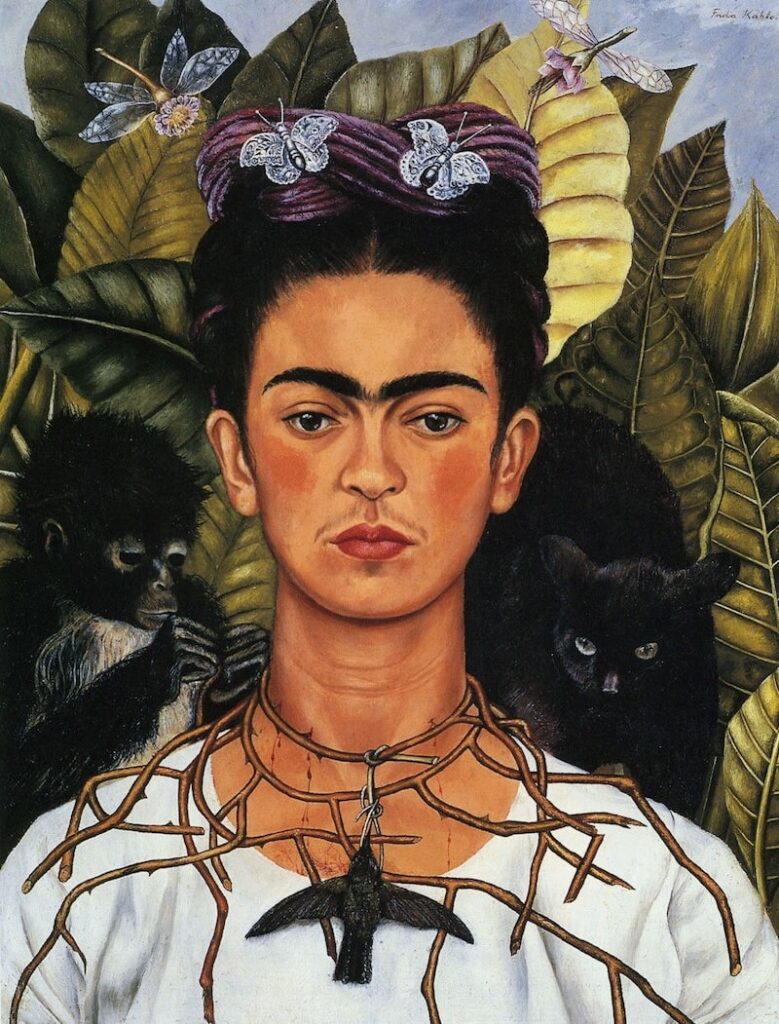
‘Self Portrait with Thorn Necklace and Hummingbird’
‘Self Portrait with Thorn Necklace and Hummingbird’
‘Self Portrait with Thorn Necklace and Hummingbird’ was made in 1940 for Nickolas Muray, the photographer she’d had a long affair with. Her relationship with him was ending, and it’s suggested that the painting was to be given away to commemorate their connection. 1940 was also the year that, after her divorce from her husband, artist Diego Rivera, was finalised, they remarried.
The necklace.
Thorns bite into her throat and draw beads of blood. The reference is Christ’s crown of thorns relocated to the neck. She’s wearing her suffering as ornament.
The hummingbird.
Dead and black, hanging at the lowest point of the necklace like a pendant. In Mexican folk belief hummingbirds were used as love charms, dried and carried to attract a lover, but hers is black; her emblem of desire is a corpse.
The black cat.
The black cat behind her left shoulder is a predator, poised. It’s associated with bad luck and death. Is it looking at the bird?
The monkey
The monkey was one of Rivera’s gifts; she kept spider monkeys at the Casa Azul and painted them repeatedly. It plucks at the thorn chain. Monkeys in Christian iconography also signal lust and sin.
The rest of the composition.
Kahlo has positioned herself in front of leaves. Two butterflies sit in her hair; symbols of resurrection, and dragonflies hover near. Her face is impassive throughout: blood, thorns, dead bird, and not a flicker of expression.