Written by Paul Regan, ©paulregan.studio
Part 1: Discuss the introductory texts from the following three exhibitions (click the underlined links for full text).
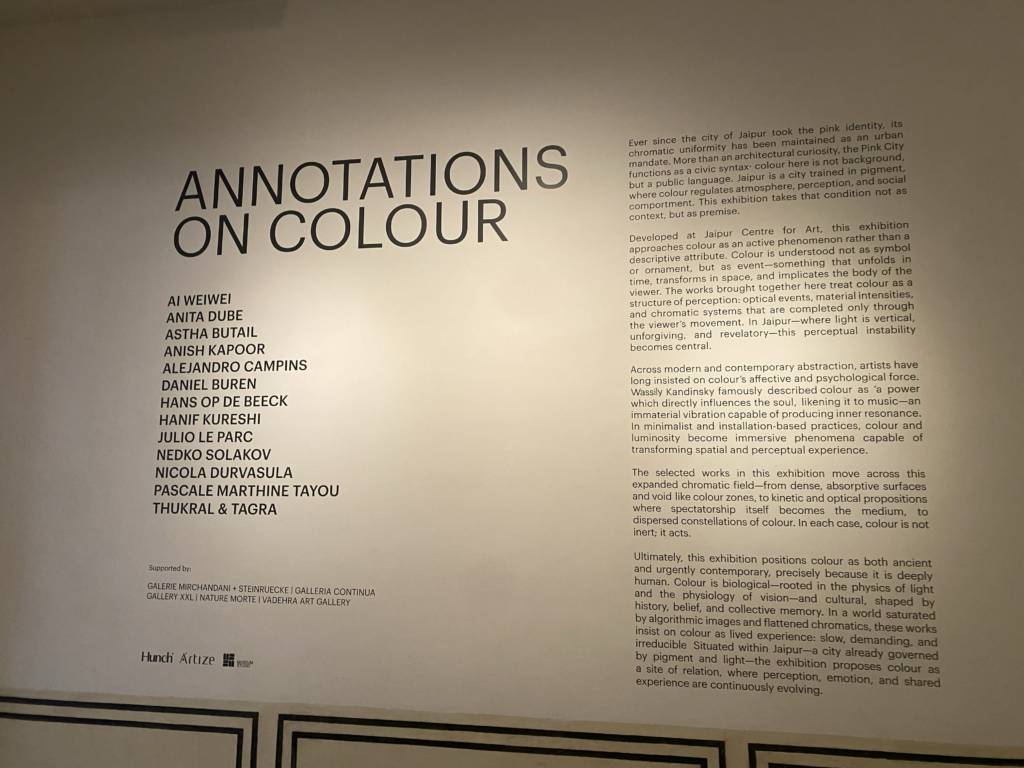
‘Annotations of Colour‘ at the Jaipur Centre for Art 2026.
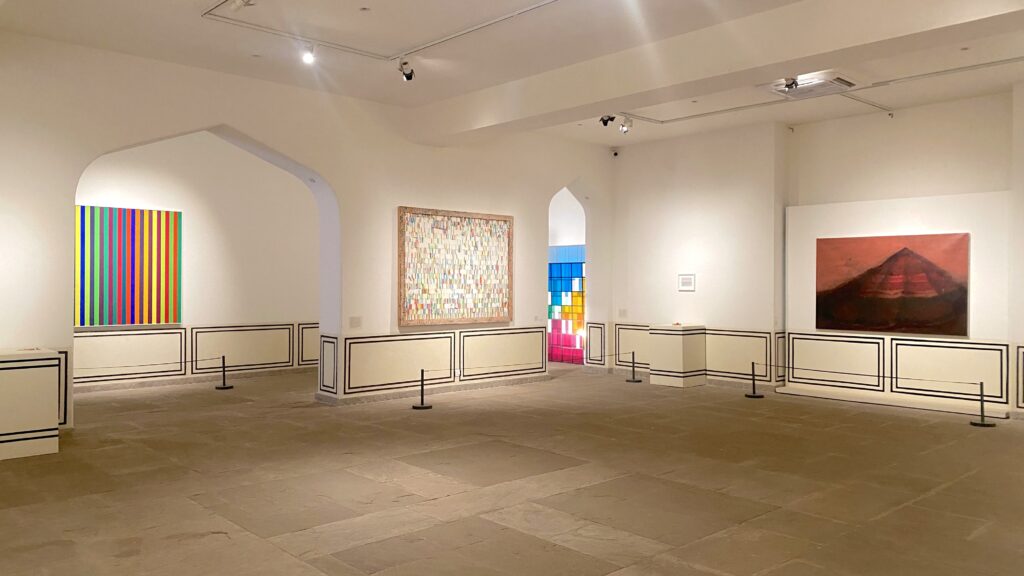
‘The selected works in this exhibition move across this expanded chromatic field-from dense, absorptive surfaces and void like colour zones, to kinetic and optical propositions where spectatorship itself becomes the medium, to dispersed constellations of colour. In each case, colour is not inert; it acts.’
Baroque / Rococo, at New Art Projects 2026.
‘Charles Williams has invited a small group of contemporary artists, whose work he also admires, to respond to his text on Baroque and Rococo painting.’
Pamela Phatsimo Sunstrum at the Barbican.
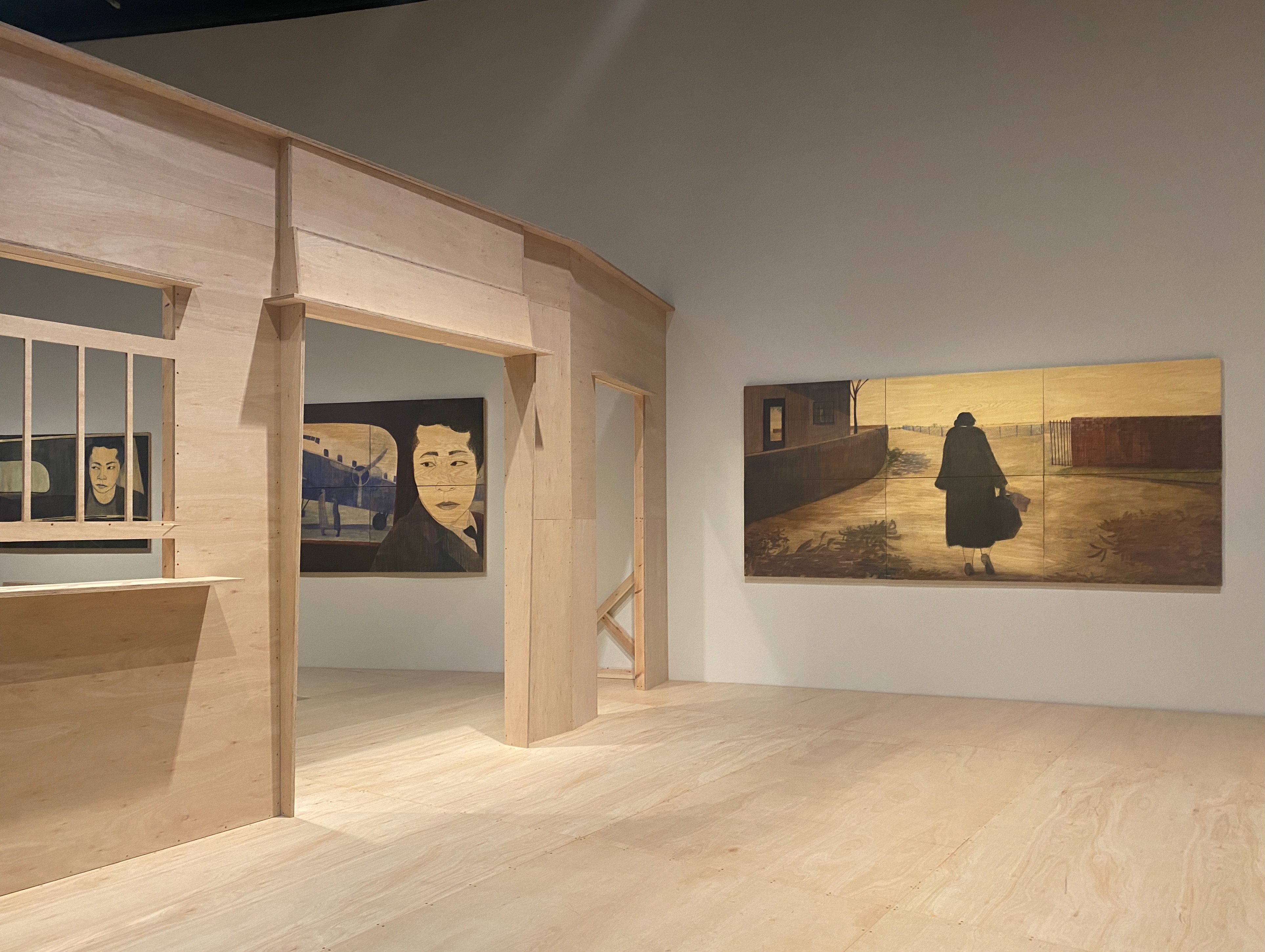
‘Drawing from the social and architectural history of the Barbican, film noir, theatrical set design and crime novels, this new body of work presents the story of Bettina, a new character in the artist’s ever-evolving cast of alter egos. story telling.’
Part 2: Fast exhibition (60 minutes)
In groups of 5 or 6, students are to decide on a concept for an exhibition, make the work and put it on display. (45 minutes)
One or more students to present their exhibition. (15 minutes)
Part 3: Curating a mixed show (45 minutes)
Students are required to bring in 4 or 5 pieces of their past work. In groups of 5 or 6, students are to look at, and select from the work bought in, and curate an exhibition on a theme.
How will the work be arranged, ordered and grouped. Does the work follow a theme? Does it tell a story? Have the works been arranged according to subject, colour, size, technique, mood? Where should a visitor start? Is there a ‘centrepiece’ work? How much space does each piece need to be seen properly? How do you ensure that the display is far to all artists involved?
What is the title of the display?
One or more students to present their exhibition.